Leave Your Message

Why Choose Plastic Sheets for Your Business?

Plastic Sheets are used across workshops, retail spaces, farms, and manufacturing floors because they can provide practical protection without adding much weight. Depending on the material, they may resist moisture, reduce light, or offer a smooth surface for fabrication. A clear sheet over a workbench, for example, can help shield the surface from spills and scratches. The right choice depends on the job.

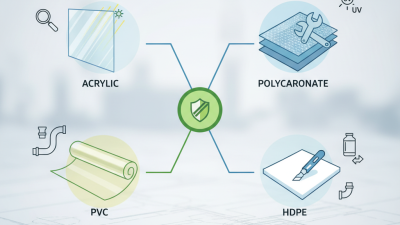
That choice deserves more than a quick price comparison. Acrylic, polycarbonate, PVC, and polyethylene sheets differ in clarity, impact resistance, flexibility, and tolerance for heat or chemicals. Thickness and finish matter, too. A sheet that works well for a sign may not suit a protective guard or outdoor cover. Check product specifications, confirm dimensions, and ask suppliers about intended use. For critical applications, test a sample under real working conditions. Small details count.

There are trade-offs. Some plastics can scratch, warp, or discolor when exposed to unsuitable conditions, and not every sheet is easy to recycle locally. Plastic is not always the best answer. Still, when its properties match the task, it can reduce maintenance and simplify handling. This guide explores the benefits, limitations, and selection questions businesses should weigh before buying Plastic Sheets. It is a practical starting point, not a substitute for checking the exact product grade.

Why Choose Plastic Sheets for Your Business?

What Plastic Sheets Are and How They Are Made

Why Choose Plastic Sheets for Your Business?

What Plastic Sheets Are and How They Are Made

Plastic sheets are flat panels made from polymer resins, often thermoplastics such as acrylic, polycarbonate, PVC, or polyethylene. Their properties vary: one grade may resist impact, while another offers chemical resistance or clear sightlines. Manufacturing usually begins with resin pellets. They are heated until molten, then pushed through a flat die to form a continuous sheet. Cooling rollers help control thickness and surface finish; cutters trim the edges to usable sizes. Some materials can also be made by calendering, which presses softened material through a series of rollers.

The process is practical, but not magic: heat, roller pressure, and cooling rates can affect flatness and internal stress. A sample can show surface appearance, but it cannot prove long-term performance. Request technical data on thickness tolerance, temperature range, impact strength, and chemical compatibility. PlasticsEurope’s Plastics—The Fast Facts 2023 reports 400.3 million tonnes of global plastics production in 2022. That figure covers plastics broadly, not sheet output; it signals the scale of the material supply chain, not a guarantee of quality.

Tips: Request a small sample and check how it cuts, bends, and cleans under real working conditions. Test it first. Then confirm the exact grade and thickness before ordering. A detail easy to overlook: two sheets that look alike may behave differently.


Common Plastic Sheet Materials and Their Properties

Why Choose Plastic Sheets for Your Business?

Common Plastic Sheet Materials and Their Properties

Choosing sheet material starts with the job: what it will touch, how it will be cut, and whether it faces impact, moisture, or sunlight. HDPE is lightweight, moisture-resistant, and easy to machine. Typical technical data sheets list its density around 0.94–0.97 g/cm³. It suits cutting boards, tank liners, and sliding wear surfaces, though it can flex under load. That matters.

Polypropylene is even lighter, with typical density near 0.90–0.91 g/cm³, and often handles many acids and alkalis well. It is useful for laboratory fixtures and chemical containers, but heat and prolonged outdoor exposure can limit some grades. For clear panels, PMMA transmits about 92% of visible light; polycarbonate typically transmits roughly 88–90%, depending on grade and thickness. Polycarbonate generally offers stronger impact resistance, while PMMA can provide a clearer-looking surface. Trade-offs remain.

PlasticsEurope’s Plastics – the Facts 2024 report estimates global plastics production at 413.8 million tonnes in 2023. That scale says little about which sheet is right for one workshop, so check grade-specific technical data before ordering. A scratched sample, warm machine enclosure, or tight screw hole can reveal issues that a catalog misses. Test first. I would also compare thickness, UV exposure, cleaning chemicals, and fabrication temperature; overlooking any one of them can make a suitable-looking sheet disappoint.

Key Business Benefits of Using Plastic Sheets

Plastic sheets help businesses manage cost, weight, and fabrication needs without adding unnecessary complexity. A lightweight panel is easier to move through a workshop than glass or metal, and many types can be cut or drilled to fit existing equipment. Clear sheets work well for display covers and protective guards, while opaque panels can create dividers or durable work surfaces. Small changes in thickness can affect strength, flexibility, and price.

Less handling effort. That matters.

Plastic is also simple to clean, which can help keep counters, signs, and protective barriers presentable during busy shifts. Some grades resist moisture and common chemicals, but performance varies by material. Check the supplier’s technical data before choosing a sheet for repeated cleaning, outdoor exposure, or contact with heat. A panel that looks sturdy may still scratch or flex more than expected. That trade-off is easy to overlook. Testing a sample in the actual workspace can reveal glare, fit, or cleaning issues before a larger order. The best choice depends on the job, not just the lowest price.

Why Choose Plastic Sheets for Your Business? - Key Business Benefits of Using Plastic Sheets

Business consideration Relevant plastic-sheet property Potential business benefit Selection note
Handling and transport Many common plastics are lighter than steel or glass of comparable volume. Can make parts easier to move and may reduce the load in transport or installation. Compare the finished part’s weight, thickness, and required strength—not material names alone.
Corrosion and moisture exposure Many plastic grades do not rust, and some have low water absorption. May suit covers, liners, guards, and components used in damp environments. Check the specific grade’s chemical, temperature, and moisture-resistance data for the service conditions.
Fabrication and customization Depending on the polymer and grade, sheets can be cut, drilled, routed, or thermoformed. Supports custom shapes, protective panels, signs, and machine components. Confirm fabrication tolerances and use suitable tools and processes for the chosen material.
Visibility and presentation Some sheet plastics are available in clear, translucent, or opaque grades. Can provide viewing windows, display panels, or light-diffusing surfaces. Optical clarity, scratch resistance, and UV performance vary by material and grade.
Impact and safety requirements Impact performance differs substantially among plastics; some grades are designed for higher impact resistance than others. A suitable sheet may help protect equipment or form a barrier in the intended application. Review test data, thickness, mounting method, and applicable safety requirements before specifying.
Electrical or thermal separation Many plastics are electrical insulators and conduct heat less readily than metals. Can be useful for covers, separators, and insulating components where the grade is appropriate. Electrical ratings and temperature limits are grade-specific; plastic is not automatically suitable for every application.
Total cost of ownership Sheet price, fabrication needs, service life, cleaning, and replacement frequency all affect cost. Comparing lifecycle costs can reveal value beyond the initial material price. Request application-specific specifications and compare equivalent thicknesses and performance requirements.

How to Select Plastic Sheets for Your Business Needs

Choosing plastic sheets starts with the job, not the price per sheet. List the loads, temperatures, moisture, chemicals, and sunlight the material will face. A clear guard beside a machine needs different impact resistance than a divider in a damp storage room. Check thickness and tolerances, too; a sheet that flexes under load can make an otherwise sound design troublesome. It matters.

Ask suppliers for technical data on impact strength, temperature range, chemical resistance, and fabrication limits. Then test a sample in the real setting. ASTM test methods can help compare properties, but lab results do not perfectly predict performance in every installation. Measure the sheet after cutting and drilling. Small details count.

End-of-life deserves attention as well. PlasticsEurope’s Plastics – the Fast Facts 2024 reports global plastics production of 413.8 million tonnes in 2023. The OECD’s Global Plastics Outlook reports that only 9% of plastic waste was recycled in 2019. These figures do not determine which sheet is right, but they make recyclability and recycled content worth asking about. Confirm that the chosen grade suits your process and local recycling options. The trade-off may be imperfect. Check before committing.

Business Applications and Handling Considerations

Plastic sheets can serve as machine guards, display panels, interior partitions, signs, and lightweight covers. Clear grades preserve visibility around equipment, while opaque sheets can hide stored materials or reduce glare. For fabricated parts, match the sheet to the job: impact resistance, stiffness, and surface finish all matter. A sample panel can reveal distortion or scratching before a large order is cut.

It is easy to specify by thickness alone, and that is often the wrong shortcut. Consider temperature changes, sunlight, cleaning agents, and the force a panel must bear. A sheet that performs well indoors may warp or discolor near a sunny window. For food-preparation or other sensitive settings, verify that the chosen material meets the application’s requirements rather than assuming all plastics are suitable.

Handle sheets with support across their surface, especially during lifting and storage. Keep protective film on until installation, and avoid dragging panels over rough benches. Small scratches add up. Cut with suitable tools and follow the material supplier’s guidance for dust control and protective equipment. Leave room for expansion where panels are fixed, since plastic can move with temperature. That detail is easy to miss. Cleaning with a soft cloth and mild soap usually helps preserve the finish; abrasive pads may leave marks.