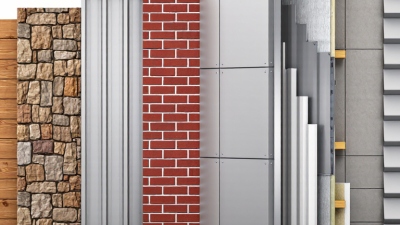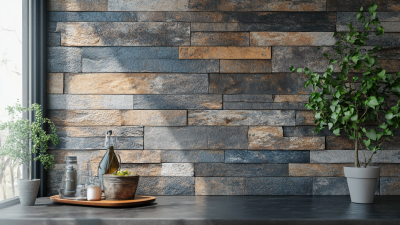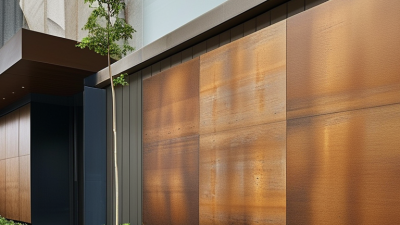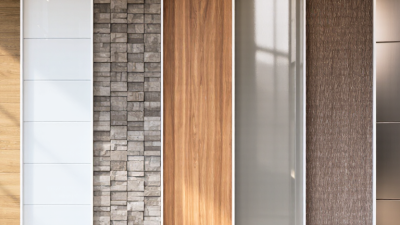
Choosing a reliable Wall Cladding manufacturer in China requires more than comparing catalog prices. Global buyers must examine material quality, production control, design capability, and export experience. A polished website is not enough.
This guide introduces ten Chinese manufacturers serving international construction markets. The selection considers product range, factory capacity, technical documentation, quality systems, customization support, and communication standards. It also looks at practical details, such as panel thickness, coating durability, fire-performance reports, packaging methods, and replacement procedures. These factors matter when cladding must survive coastal air, strong sunlight, freezing temperatures, or busy urban installation sites.
Details matter most.
A serious supplier should provide clear samples, current test documents, installation guidance, and traceable specifications. Buyers should still verify every claim independently. Public information can change, and “top” is never completely objective. A manufacturer may excel in aluminum panels but perform less strongly with stone veneer or large customized projects. That limitation deserves attention.
This overview is designed as a practical starting point, not a substitute for factory audits or project testing. It encourages buyers to request physical samples, confirm production lead times, review warranty terms, and discuss local building requirements before signing contracts. The strongest partnership is built through evidence, consistent communication, and realistic expectations. Sometimes, the cheapest quotation hides extra work later. Careful comparison can expose those risks before they reach the construction site.
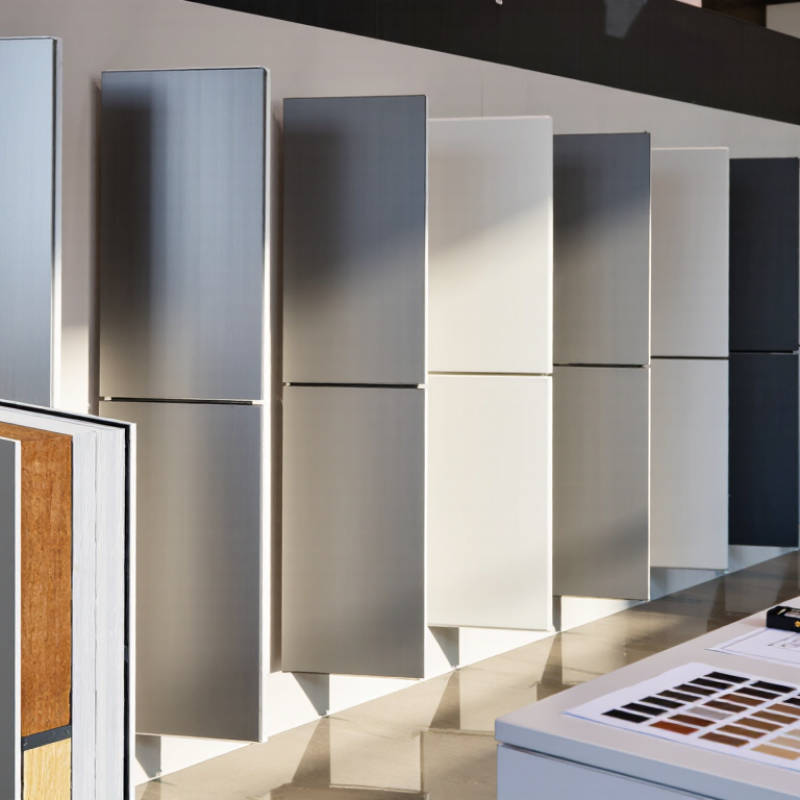
A leading Chinese wall cladding manufacturer offers more than attractive panels and competitive pricing. It combines verified production experience, stable material quality, and clear technical communication.
Factory visits should reveal organized storage, calibrated equipment, and traceable batch records.
Samples must match later production in color, texture, thickness, and dimensional tolerance. This is where many projects become difficult.
Professional manufacturers understand local climate and building requirements. They can explain performance against moisture, wind loads, fire risks, corrosion, and temperature changes.
They should provide test reports, installation details, product data sheets, and export documentation. Independent testing is more convincing than unsupported claims.
Experienced teams also identify limits early, especially when a custom finish affects lead time or maintenance. No supplier gets every project right. Honest risk discussion matters.
Tips:
Request a physical sample, recent test records, and a small production trial. Check whether packaging protects corners during long-distance transport. Ask who handles technical questions after shipment.
A reliable manufacturer answers clearly, records revisions, and confirms tolerances in writing. Cost remains important, but the lowest quotation may hide weaker coatings, inconsistent colors, or replacement delays. Buyers should compare the complete supply process, not only the panel price.
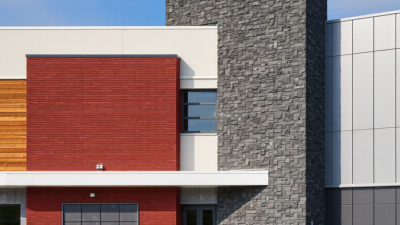
Selecting China’s top wall cladding manufacturers requires evidence, not attractive brochures. We reviewed production capacity, export experience, testing records, quality systems, and project references. ISO’s 2022 Survey recorded more than 1.2 million ISO 9001 certificates worldwide. Certification alone proves little. We therefore checked certificate validity, issuing bodies, and factory-level procedures. Product evaluations included fire performance, water resistance, wind-load data, thermal movement, and coating durability. Independent laboratory reports carried greater weight than self-declared specifications. We also examined sample consistency, packaging details, lead times, and after-sales response. Small details matter.
Sustainability formed another selection filter. UNEP’s 2023 Global Status Report states that buildings and construction consume about 34% of global energy and create roughly 37% of energy-related emissions. This makes recycled content, service life, and maintenance requirements commercially important, not merely environmental claims. Manufacturers received stronger evaluations when they supplied traceable material data and project-specific compliance documents. Export records were cross-checked against destination requirements and delivery evidence. We considered financial and operational stability, but public information remains incomplete. That is a limitation. A factory may perform well on one large project and poorly under rapid volume growth. Our final assessment used weighted scoring, with quality and compliance ahead of price, followed by capacity, logistics, engineering support, and documented sustainability performance. Credibility must be earned repeatedly.
China’s wall cladding sector serves residential, commercial, and industrial projects worldwide. Grand View Research estimates the global siding market will expand steadily through 2030, supported by renovation and energy-efficiency demand. The ten manufacturers below represent common sourcing profiles rather than guaranteed rankings.
Manufacturer 1 focuses on aluminum panels and offers reliable CNC cutting. Manufacturer 2 specializes in fiber-cement boards for fire-conscious projects. Manufacturer 3 produces insulated sandwich panels for warehouses and cold rooms. Manufacturer 4 develops stone-textured exterior systems with moderate customization. Manufacturer 5 supplies wood-plastic composite cladding for humid climates. Manufacturer 6 serves large projects with automated coating lines. Manufacturer 7 combines façade design support with export packaging. Manufacturer 8 targets cost-sensitive housing developments. Manufacturer 9 emphasizes lightweight panels and faster installation. Manufacturer 10 provides made-to-order profiles for unusual building dimensions. These differences matter more than a simple factory ranking.
Tips: Request recent test reports, coating specifications, sample corners, and carton photos. Check water absorption, wind-load data, thermal performance, and batch consistency. ASTM, EN, and ISO references help, but certificates should match the exact product. A factory video can look convincing. It is not enough. Ask for production records and third-party inspection access. Grand View Research and Fortune Business Insights both connect market growth with renovation, sustainability, and energy-saving construction. Still, some supplier claims remain vague. Buyers should compare delivered performance, not only factory prices.
| No. | Anonymous Manufacturer Profile | Primary Wall Cladding Focus | Typical Material Options | Common Application Areas | Relevant Technical Standards or Tests | Customization Capabilities | Key Verification Points for Global Buyers |
|---|---|---|---|---|---|---|---|
| 01 | Profile 01 Exterior envelope specialist |
Aluminium composite panels for façades | Aluminium skins with a mineral, fire-retardant, or polyethylene core, depending on the specified product | Commercial façades, retail buildings, offices, and entrance features | Reaction-to-fire classification, coating performance, peel strength, impact resistance, and dimensional stability | Panel thickness, surface finish, colour matching, cutting, routing, folding, and project-based panel sizes | Check before purchase Request the complete core composition, fire-test report, coating specification, and sample approval |
| 02 | Profile 02 Metal façade systems supplier |
Aluminium solid panels and cassette systems | Flat aluminium sheets, folded panels, cassette panels, and extruded support components | High-rise buildings, transport facilities, institutional projects, and ventilated façades | Aluminium alloy and temper documentation, coating thickness, wind-load calculations, and water-drainage details | Perforation, bending, cassette fabrication, concealed fixing, visible fixing, and non-standard geometry | Check before purchase Confirm alloy grade, panel tolerances, substructure compatibility, and installation drawings |
| 03 | Profile 03 Insulated sandwich-panel producer |
Insulated metal wall panels | Pre-painted steel or aluminium skins with mineral wool or polymeric insulation cores | Industrial buildings, cold-storage facilities, warehouses, workshops, and cleanroom partitions | Thermal conductivity, fire resistance, air permeability, water tightness, load-bearing capacity, and joint performance | Core density, panel length, joint profile, skin thickness, colour, and cold-room or cleanroom accessories | Check before purchase Verify fire classification, core density, thermal performance, and joint details for the project climate |
| 04 | Profile 04 Fiber cement façade specialist |
Fiber cement rainscreen boards | Cementitious boards reinforced with mineral or cellulose fibres, supplied in natural or factory-finished surfaces | Residential façades, schools, public buildings, ventilated rainscreens, and renovation projects | Water absorption, freeze-thaw resistance, dimensional change, bending strength, impact resistance, and fire behaviour | Board dimensions, edge treatment, drilled holes, surface texture, colour, and concealed or exposed fixing layouts | Check before purchase Review moisture movement, installation gaps, cutting requirements, and local fire compliance |
| 05 | Profile 05 Compact laminate cladding producer |
High-pressure laminate exterior panels | Resin-impregnated decorative kraft-paper layers with a protective surface finish | Ventilated façades, balconies, soffits, canopies, and residential developments | Weathering resistance, colour stability, impact resistance, water absorption, dimensional tolerance, and reaction to fire | Decorative patterns, wood or stone appearances, panel formats, CNC machining, perforation, and edge finishing | Check before purchase Ask for exterior-grade classification, UV-weathering data, batch colour control, and fixing recommendations |
| 06 | Profile 06 PVDF-coated metal panel manufacturer |
Pre-finished aluminium and steel façade panels | Coil-coated aluminium or galvanized steel with protective primer and exterior-grade topcoats | Commercial buildings, airports, hotels, office towers, and architectural feature walls | Coating thickness, adhesion, gloss, colour difference, salt-spray resistance, humidity resistance, and accelerated weathering | Colour matching, gloss level, metallic finishes, coil width, panel profile, perforation, and fabrication | Check before purchase Confirm the coating system, warranty conditions, colour tolerance, and coastal-environment suitability |
| 07 | Profile 07 Stone and ceramic façade systems supplier |
Large-format ceramic or sintered façade panels | Porcelain ceramic, sintered mineral slabs, and mechanically fixed ventilated façade components | Premium commercial façades, hospitality projects, public buildings, and exterior feature walls | Water absorption, breaking strength, frost resistance, thermal shock, slip-related surface properties, and impact performance | Surface patterns, slab sizes, cutting, corner fabrication, drilled fixing points, and visible or concealed support systems | Check before purchase Confirm panel weight, fixing calculations, corner details, replacement procedures, and breakage allowances |
| 08 | Profile 08 Decorative exterior wall panel producer |
PVC, ASA, polymer, or composite decorative siding panels | Polymer-based profiles, co-extruded weather-resistant layers, and lightweight composite boards | Low-rise housing, villas, garden buildings, renovations, and lightweight exterior refurbishment | Impact resistance, thermal expansion, UV exposure, water resistance, wind resistance, and colour retention | Profile shape, texture, colour, length, interlocking joint, ventilation accessories, and trim components | Check before purchase Review expansion allowances, temperature range, UV data, fastening spacing, and accessory compatibility |
| 09 | Profile 09 Architectural perforated-panel fabricator |
Perforated, expanded, and decorative metal screens | Aluminium, galvanized steel, stainless steel, and weathering-resistant metal sheets | Solar screens, balcony privacy panels, parking structures, façades, ceilings, and decorative partitions | Open-area ratio, tensile or bending strength, corrosion resistance, coating adhesion, wind pressure, and fixing capacity | Hole pattern, open area, sheet thickness, folds, edge frames, laser cutting, and powder or liquid coating | Check before purchase Request shop drawings, open-area calculations, wind-load data, coating details, and edge-treatment samples |
| 10 | Profile 10 Integrated façade engineering supplier |
Mixed-material rainscreen and façade packages | Combinations of aluminium, steel, fiber cement, laminate, ceramic, glass, and insulation components | Large commercial projects, mixed-use developments, hospitals, schools, and multi-building compounds | Structural calculations, thermal bridging, fire safety, drainage, air tightness, water penetration, and system durability | Material combinations, shop drawings, BIM files, engineering coordination, prefabrication, and installation support | Check before purchase Define responsibility for engineering, approvals, testing, packaging, site support, and after-sales service |
China’s leading wall cladding manufacturers differ sharply in material control. Aluminum panels offer low weight and corrosion resistance, while fiber cement and ceramic systems provide stronger fire performance. According to Grand View Research, the global building envelope market continues expanding through 2030, driven by energy efficiency and renovation demand. That growth makes technical evidence more valuable than attractive samples.
A serious comparison checks ISO 9001 quality systems, ISO 14001 environmental management, and ISO 45001 workplace controls. Certificates alone are not enough. Buyers should request current audit records, coating test results, and reaction-to-fire reports under EN 13501 or ASTM standards. The 2023 ISO Survey recorded more than one million ISO 9001 certificates worldwide, yet certificate quality can vary. Factory verification still matters. Very much.
Production capacity needs physical proof. Ask about extrusion lines, coating ovens, cutting accuracy, monthly output, and backup suppliers for aluminum or mineral cores. A stated capacity of 500,000 square meters means little without delivery records and inspection procedures. This is where many comparisons become too generous, including this one.
Export reach should include packaging design, container loading photos, port options, and experience with destination codes. The World Bank’s 2023 Logistics Performance Index ranked China 19th globally, supporting its strong shipping infrastructure. However, logistics performance does not guarantee project reliability. Request references from comparable climates, especially humid coastal regions, and inspect warranty terms word by word.
China Top 10 Wall Cladding Manufacturers for Global Buyers
Global buyers should evaluate China’s top wall cladding manufacturers through evidence, not catalog images. Request factory registration details, production photos, material specifications, and recent test reports. Confirm whether reports match the exact panel, coating, thickness, and fire rating you need. A generic certificate may not prove product performance.
Ask for proof.
Order samples before negotiating volume. Check color consistency, edge straightness, surface texture, packaging strength, and installation instructions. Measure the sample yourself when possible. One supplier may quote a low factory price but exclude tooling, export packing, inspection, or inland transport. Request a complete quotation with Incoterms, minimum order quantity, lead time, payment stages, and replacement terms.
Visit the factory or arrange an independent audit. Review raw material storage, cutting equipment, moisture control, and final inspection records. Ask how defective panels are separated and recorded. Video calls help, but they cannot replace physical verification. I once trusted polished photographs too quickly; the delivered packaging was weaker than expected. That mistake changed our sourcing checklist.
Use a small trial order before committing to a container. Compare production samples with the approved reference and document every tolerance. Reliable manufacturers welcome clear specifications and realistic questions. Delayed answers, unexplained certificate changes, or pressure for full payment deserve careful review. Keep communication written, including color codes, drawings, carton marks, and inspection standards. Good sourcing is not only about finding a competitive price; it is about creating evidence at every stage.