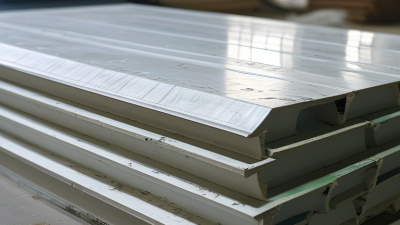
Choosing the right Pvc Sheet begins with the conditions it must face. Will it sit indoors or outdoors? Does it need to resist impact, moisture, chemicals, or repeated cleaning? A clear answer prevents costly mismatches. A glossy surface may look durable, yet appearance alone tells little about performance.
Materials scientist Michael Ashby’s selection approach can be paraphrased simply: “Match the material to the job, not just the headline specification.” This is a paraphrase, not a verbatim quotation. Use it as a practical guide when comparing thickness, rigidity, surface finish, and fabrication needs. A thin sheet may suit a lightweight cover, while a thicker panel may better handle knocks or support. Check the product data sheet, and confirm that its stated properties match your actual use. Small details matter. Edge finish, cutting method, and mounting points can affect the final result. I have seen buyers focus heavily on price, then overlook installation demands. It happens. The cheapest option is not always the simplest one to work with.
This guide explains how to compare Pvc Sheet grades, assess key performance needs, and ask suppliers useful questions. It also considers common selection mistakes, because the perfect sheet does not exist for every project. The right choice depends on the task, the environment, and the trade-offs you can accept. A little uncertainty is normal; careful checking makes the decision more dependable.

Start with the job. Will the sheet form a rigid panel, face warm fluids, or bend around a tight curve? Record the operating temperature, likely chemical contact, impact risk, and fixing method before choosing a grade. Small details matter. An indoor splash guard and an exposed machine cover may need different properties.
PVC-U is rigid and dimensionally stable, making it practical for housings, partitions, and fabricated panels. It resists many chemicals, but compatibility depends on concentration, temperature, and exposure time. Check a chemical-resistance chart for the actual conditions. PVC-C is worth considering when greater heat resistance is needed, such as near warm process fluids. Confirm its service limits in technical data.
Flexible PVC suits seals, curtains, and coverings that must drape or absorb movement. Yet softness is not a free advantage. Plasticizer choice can affect flexibility in cold conditions, chemical compatibility, and long-term feel. I would not select by the material name alone; that shortcut can fail. Compare samples under real conditions, and reconsider the choice if a sheet curls, stiffens, or marks easily.
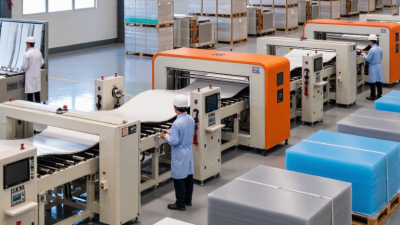
Define the application first: consider operating temperature, chemical exposure, and whether the sheet must be rigid or flexible.
Typical maximum continuous service temperature (°C): PVC-U is commonly rated to about 60°C, while PVC-C can typically handle about 90°C. Flexible PVC is formulation-dependent; 60°C is a general reference, not a universal limit. Check the product data sheet and chemical compatibility for your application.
When choosing PVC-U sheet, check density alongside thickness and intended load. PVC Handbook, 2nd edition (Wiley, 2005), gives typical rigid PVC density within roughly 1.3–1.45 g/cm³. Treat this as a screening range, not a guarantee: fillers, pigments, and processing can shift a sheet’s measured value. ISO 1183-1:2019 specifies methods for measuring the density of non-cellular plastics. It does not set a pass-or-fail density for every PVC-U sheet.
Tips: Request a batch-specific density result and test method. Compare like with like. A heavier sheet may contain more mineral filler, but density alone cannot confirm strength, impact resistance, or suitability for machining.
For a practical check, weigh a sample with known dimensions, then compare its calculated density with the supplier’s technical data. A small mismatch may reflect formulation variation or measurement error; it deserves a question, not an instant rejection. Also inspect a freshly cut edge: voids, uneven color, or brittle chips can signal problems that one density figure will miss. For outdoor or structural use, verify the relevant mechanical and weathering data separately. Density is useful. It is not the whole decision.
| Selection criterion | Reference data or property | Why it matters | What to check before purchase |
|---|---|---|---|
| Density | Typical PVC-U sheet density is approximately 1.3–1.45 g/cm³. Test method: ISO 1183-1. | Density helps estimate sheet mass and compare material batches. It does not, by itself, determine strength or suitability. | Request the product’s declared density, test method, and tolerance. Compare like-for-like material grades. |
| Sheet mass | Approximate mass per square metre = density (kg/m³) × thickness (m). At 1.3–1.45 g/cm³, a 1 mm sheet is about 1.3–1.45 kg/m². | Useful for estimating handling, support requirements, and shipping weight. | Use the actual declared density and thickness; account for tolerances and any surface finish. |
| Thickness and flatness | Available thicknesses and thickness tolerances vary by product, manufacturing process, and supplier. | Thickness affects stiffness, weight, machining allowance, and fit. | Confirm nominal and minimum thickness, thickness tolerance, sheet dimensions, and flatness for the intended use. |
| Mechanical properties | Tensile properties are measured using methods such as ISO 527. Impact performance depends on formulation, thickness, temperature, and test method. | Important for parts exposed to loads, impact, drilling, or handling. | Ask for test data for the exact grade and thickness; check the test conditions and whether the values are typical or guaranteed. |
| Temperature exposure | Heat resistance varies among PVC-U grades and is not represented by density alone. Vicat softening temperature can be determined using ISO 306. | Heat can affect dimensional stability and mechanical performance. | Compare the declared Vicat value and service-temperature limits with the highest expected operating temperature. |
| Chemical contact | Chemical resistance depends on the chemical, its concentration, temperature, exposure time, and the sheet formulation. | Contact with an incompatible chemical can cause swelling, softening, cracking, or loss of strength. | Check a compatibility chart for the exact chemical and conditions; test a sample if exposure is critical. |
| Fabrication requirements | PVC-U sheet can be processed by methods such as cutting, drilling, and machining; suitable settings depend on thickness and equipment. | Fabrication method affects edge quality, heat buildup, and finished-part accuracy. | Confirm the grade is suitable for the planned process and follow the fabricator’s guidance for tooling and ventilation. |
| Standards and documentation | ISO 1183-1 specifies methods for determining the density of non-cellular plastics; ISO 527 covers tensile-property testing. | Standardized methods make reported results easier to interpret and compare. | Request a technical data sheet and, where required, a test report identifying the method, sample, and test conditions. |
Values described as typical are general reference information, not a guarantee for every PVC-U sheet. Verify the technical data for the specific grade, thickness, and application.
A PVC sheet may look sturdy on a workbench, yet its performance depends on how it will be loaded. ASTM D638 measures tensile properties, including strength and elongation, by pulling a shaped specimen until it stretches or breaks. These results help assess parts that face steady pulling, bending, or fastening stress. ASTM D256 measures notched impact resistance, commonly using an Izod test. It can help indicate how a sheet responds to a sudden blow. That matters. A high tensile value does not automatically mean strong impact performance.
Tips: Compare reports for the same PVC formulation, specimen thickness, conditioning, and test method. For D256, check whether specimens were notched and review the reported units. Ask for the full test report, not just a single headline number. A small difference in setup can change the comparison.
Match the data to the real job. A cover mounted near a vibrating machine may need impact resistance, while a panel held under constant tension calls for careful review of D638 results. Also consider temperature, edge quality, and how holes or fasteners affect stress. Lab tests provide useful evidence, not a promise of field performance. Even then, they cannot reproduce every corner hit or installation mistake. I would treat borderline results cautiously and test a sample under realistic conditions before choosing a sheet.
A PVC sheet that feels rigid in your hands may still bow across a wide opening. Choose thickness by considering the load and unsupported span together. A light cover over closely spaced supports may need less thickness than a shelf holding tools across a long gap. Span changes everything. Check the sheet’s technical data for load and deflection guidance; PVC formulations and service temperatures can affect performance.
Installation matters too. Measure the distance between supports, then note where screws, clips, or edge restraints will sit. Tight fixing points can concentrate stress, while loose or widely spaced supports may let the sheet sag. In warm areas, account for expansion and leave the clearances specified by the supplier. Small details count. A panel exposed to sun or heat may behave differently from one indoors.
For a practical check, sketch the frame and mark the expected load before selecting a thickness. A thicker sheet is not automatically the best answer: it can add weight and cost without correcting poor support spacing. I would verify the final choice against the manufacturer’s span tables, especially for overhead or frequently loaded panels. Those tables can feel cautious, but guessing from appearance is less reliable.
How to Choose the Right PVC Sheet for Your Needs?
PVC sheet selection depends on the chemicals, sunlight, and fire risks in its actual environment. ASTM D543 evaluates chemical resistance by exposing samples and checking changes such as weight, dimensions, or appearance. ASTM G154 uses fluorescent UV lamps to compare weathering effects. Neither test alone predicts exact service life. Formulation and exposure conditions matter.
Tips: Ask for test conditions and results, not just “chemical resistant” or “UV stable.” Match ASTM D543 exposure to the specific cleaner, concentration, temperature, and contact time. For outdoor use, compare ASTM G154 results and check for color change, cracking, or loss of strength. UL 94’s published criteria limit V-0 afterflame to 10 seconds per application and 50 seconds across ten applications. Small details matter.
Treat each rating as evidence, not a guarantee. A UL 94 classification applies to a tested material thickness; a thinner sheet may behave differently. Likewise, accelerated UV exposure cannot perfectly reproduce years of sun, moisture, and temperature cycling. For a critical installation, request documentation for the exact grade and thickness, then test a sample under realistic conditions. One uncomfortable gap remains: a neat laboratory result may not match a messy workshop. Sources: ASTM D543, ASTM G154, and UL 94 test methods and criteria.