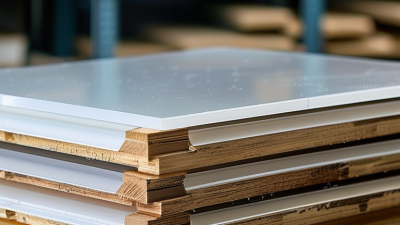
China Best PVC Sheet Manufacturer and Supplier?
Choosing the China Best PVC Sheet Manufacturer and Supplier? requires more than comparing catalogue prices. The decision should connect material performance, production control, documentation, and project support. PVC sheet is used in chemical tanks, laboratory surfaces, cleanroom panels, fabrication, and protective linings. Each application demands different thickness, hardness, surface finish, and chemical resistance.
Market evidence supports careful supplier evaluation. Fortune Business Insights valued the global PVC market at approximately USD 45.18 billion in 2023. Its report projects continued expansion through 2032, supported by construction, infrastructure, healthcare, and industrial applications. Grand View Research also identifies construction and industrial demand as major PVC growth drivers. These reports describe the wider PVC industry, not only sheet products. That distinction matters.
Look closely.
A reliable manufacturer should explain resin selection, plasticizer use, extrusion temperature, dimensional tolerances, and batch inspection methods. Factory experience becomes visible in practical details, such as flat sheets without edge curling, consistent color across pallets, and protective film that does not leave adhesive marks. ISO 9001 certification can support process consistency, but certification alone does not prove product suitability. Buyers should request recent test reports for tensile strength, impact resistance, chemical compatibility, and thermal behavior. ASTM and ISO methods can make comparisons more meaningful.
Some market figures differ because research firms use different definitions and forecasting periods. This is worth acknowledging. A supplier may also describe itself as “best” without publishing enough evidence. Independent testing, traceable samples, clear lead times, and responsive technical communication provide stronger proof. The right China-based partner should deliver dependable Pvc Sheet performance, not merely attractive quotations.
What Is PVC Sheet and Where Is It Used?
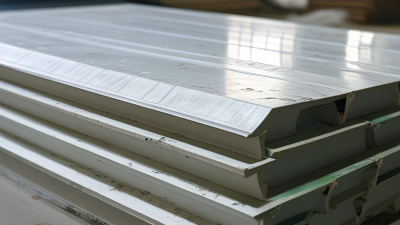
PVC sheet is a flat, durable panel made from polyvinyl chloride resin. Manufacturers adjust its formulation for rigidity, impact resistance, or flexibility. The surface can be smooth, matte, embossed, or printed.
According to Grand View Research, the global PVC market reached approximately USD 45 billion in 2023. This broad market includes sheets, pipes, films, and other products. PVC sheets are used for wall cladding, partitions, signage, machine guards, laboratory furniture, and protective linings. In workshops, a rigid sheet can cover a damp wall or form a lightweight enclosure. In commercial interiors, textured panels can provide a washable finish. They are also easier to cut than many metal alternatives.
Performance depends on more than thickness. Temperature, chemical exposure, fixing methods, and sunlight can change the result. PlasticsEurope’s Plastics—the Facts reports show PVC remains a significant material in European plastics demand, but recycling and end-of-life planning still require attention. That point is often missed. PVC is not automatically suitable for every application.
Tips: Check the technical data sheet before ordering. Compare density, thickness tolerance, working temperature, and fire performance. For outdoor use, ask about UV stabilization. Measure the cutting allowance carefully. A 3 mm panel may work for a sign, but it can flex under pressure. I have found that installation quality often matters as much as the sheet itself. Mistakes happen. Semi-rigid material may need closer supports than expected.
How PVC Sheets Are Manufactured in China
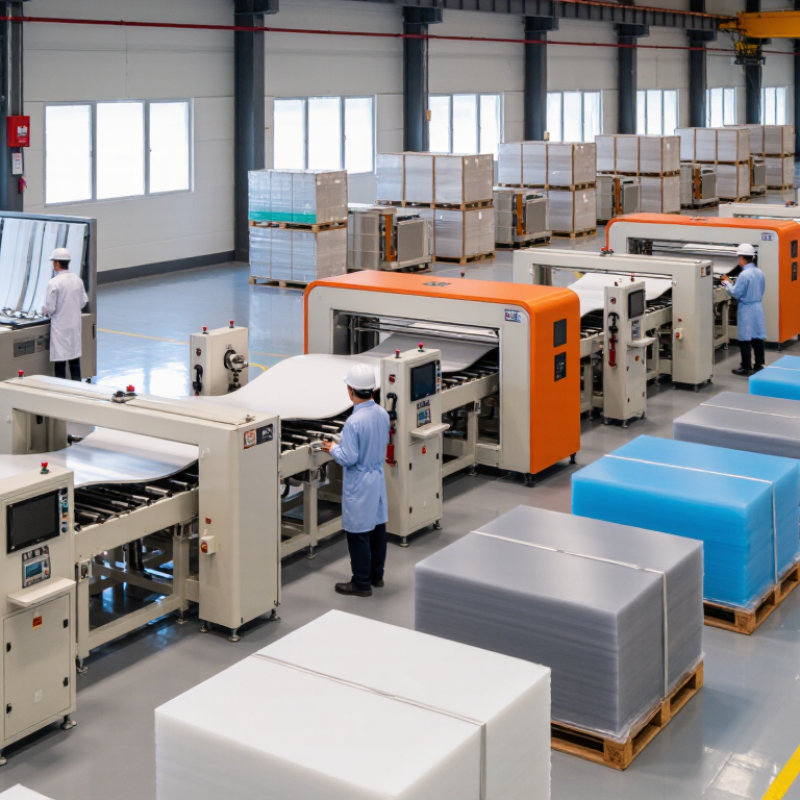
China’s PVC sheet manufacturing begins with controlled formulation, not the extrusion line. Producers blend PVC resin with stabilizers, impact modifiers, pigments, and processing aids. The mixture is heated in a high-intensity mixer, then compounded into a uniform melt. Moisture and contamination must be controlled closely.
The melt usually enters a calender or flat-die extruder. Roll gaps set thickness, while cooling rollers stabilize surface finish and dimensions. Trimming follows. Sheets are then checked for thickness, color consistency, tensile performance, and visible defects. A practical factory keeps batch records and tests samples before shipment. Small variations still happen.
Grand View Research valued the global PVC market at about USD 45.74 billion in 2023. It forecasts growth from 2024 to 2030, increasing pressure on Chinese suppliers to improve consistency and efficiency. Industry assessments also identify construction as a major PVC demand sector, where sheet flatness and long-term durability matter more than a low purchase price.
A reliable supplier should provide resin specifications, additive details, inspection records, and clear tolerances. Asking only for the “best” manufacturer is too simple. The better question concerns process control. Can the supplier reproduce the same sheet after several production runs? Can it explain a failed test without hiding the cause? Those answers often reveal more than a sales brochure.
Key Quality Standards for PVC Sheet Manufacturers
China Best PVC Sheet Manufacturer and Supplier?
Key Quality Standards for PVC Sheet Manufacturers
Choosing a PVC sheet manufacturer requires more than comparing prices or polished samples. Quality begins with controlled raw materials, stable formulations, and documented production procedures. A professional supplier should identify resin grades, plasticizer levels, additives, and sheet thickness clearly. These details affect flexibility, impact strength, surface finish, and long-term performance.
A practical audit should examine test reports against recognized methods, such as ASTM or ISO standards. Tensile strength, elongation, density, dimensional tolerance, and heat resistance deserve careful review. For construction applications, fire behavior and chemical resistance may also require testing. Ask for recent reports, not only certificates issued years ago. Batch traceability matters. Samples can mislead. A sheet may look excellent while hiding inconsistent thickness or weak edges.
Reliable manufacturers inspect temperature, pressure, cooling speed, and line speed during extrusion. They should record these controls for every production batch. Visual checks should cover bubbles, scratches, color variation, warping, and contamination. Packaging also needs attention, especially for long-distance shipping and humid storage conditions. No factory is perfect. The stronger supplier admits limitations and explains corrective actions. Buyers should verify claims through independent testing when the application carries serious safety or performance demands. Some requirements also depend on the destination market, so compliance documents must match the final use and local regulations.
How to Compare Chinese PVC Sheet Suppliers
Choosing the best PVC sheet supplier in China requires more than comparing quoted prices. Grand View Research estimated the global PVC market at about USD 45.6 billion in 2023. That scale creates wide differences in quality, capacity, and technical control. Request resin specifications, sheet thickness, density, surface finish, and application details. A supplier should provide recent test reports, not only a polished sample.
Check measurable consistency.
Ask for thickness tolerance across the full sheet, color variation records, impact strength, and softening temperature. For construction applications, compare results with relevant ASTM or ISO methods. Also review the factory’s quality system, batch-traceability process, and calibration records. ISO 9001 certification helps, but it does not replace production evidence. Certificates can be real and still reveal little. Inspect the actual process.
Use a small trial order before signing a large contract. Measure five sheets from different positions, including the corners. Compare packaging, edge protection, moisture exposure, and loading photographs. Request production lead-time data from the previous six months. The VinylPlus 2024 progress report recorded more than 810,000 tonnes of PVC recycled in Europe during 2023, showing why material disclosure matters. Ask whether recycled content affects color, strength, or surface quality. It often does. Freight terms, replacement procedures, and response times deserve equal attention. Price remains important, but the cheapest offer may become expensive after warped sheets, delayed inspection, or inconsistent batches. Supplier comparison is never perfectly clean. That is the uncomfortable part.
How to Choose the Best PVC Sheet Partner for Your Needs
Choosing the best PVC sheet partner requires more than comparing quotations. Market reports show why. Grand View Research estimated the global PVC market at roughly USD 45 billion in 2023, with continued growth expected through 2030. Demand is rising, but supplier quality remains uneven. A low price can hide unstable thickness, weak packaging, or delayed production.
Start with technical evidence. Ask for recent thickness records, material composition, surface-finish samples, and test results. For construction sheets, confirm relevant ASTM or EN requirements before discussing volume. A capable China-based manufacturer should explain its extrusion temperature control, calibration process, and inspection frequency. I prefer suppliers that retain batch samples. Small details matter. A 0.3-millimeter variation may affect installation and waste.
Check experience through practical questions. Can the supplier reproduce your color across three batches? How are warped sheets handled? What happens after a failed inspection? Supplier audits should include machinery condition, worker training, traceability, and export packaging. ISO 9001 certification helps, but it does not replace factory evidence. Industry reports often present different PVC market forecasts, which is a useful warning: projections are not promises. I have also seen attractive samples fail after transport. Request a pilot order, inspect it independently, and record agreed tolerances in the contract. No partner is perfect. Transparency during a problem is often more valuable than polished sales language.
How to Choose the Best PVC Sheet Partner for Your Needs
A practical supplier evaluation should balance product quality, technical support, delivery reliability, compliance, and total cost. The benchmark below uses a 100-point decision model and does not represent any specific company or brand.
Product quality receives the highest weighting because consistent thickness, surface finish, dimensional stability, and application performance directly affect production results. Buyers should then verify technical support, quality-control documentation, lead times, certifications, and pricing before making a final decision.