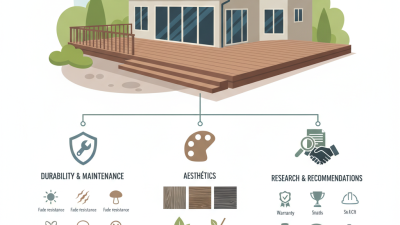
Composite Decking has moved from a niche alternative to a serious choice for homeowners, contractors, and commercial buyers. Mordor Intelligence estimates the global composite decking market at about US$4.26 billion in 2024, with projected growth through 2029. Figures vary by report, partly because analysts define the market differently. A useful reminder: market forecasts are estimates, not guarantees.
For buyers comparing manufacturers, growth alone says little about product quality. Board composition, surface traction, heat retention, fastening systems, warranties, and regional availability all matter. Imagine a sun-exposed patio where bare feet meet a dark board at midday. That detail can matter more than a polished product photo. Trex CEO Bryan Fairbanks has highlighted low maintenance and durability as important reasons buyers choose composite decking over traditional wood. His industry perspective is relevant, though it cannot replace independent testing or project-specific advice.
This guide compares manufacturers for global buyers, focusing on product range, performance evidence, support, and practical sourcing considerations. Grand View Research reported that the broader global wood-plastic composites market reached US$7.49 billion in 2023; that category includes applications beyond decking, so it should not be mistaken for decking revenue. A careful distinction matters. Specifications, climate conditions, and installation quality can change real-world results. No brand is best everywhere. The shortlist ahead is a starting point, not a substitute for checking local stock, technical documents, and warranty terms.
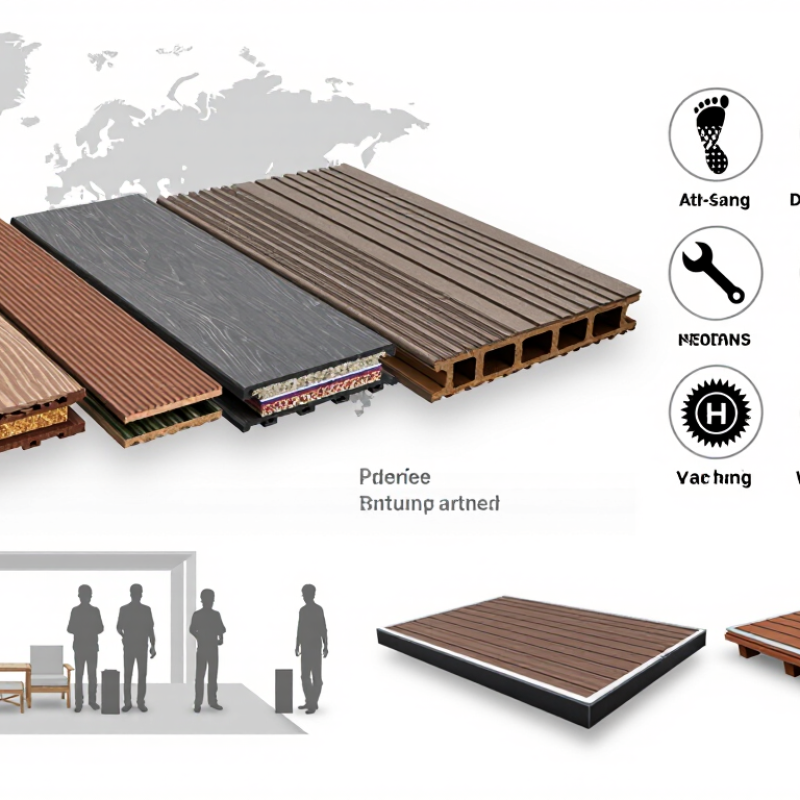
Composite decking typically combines wood flour or fibers with thermoplastic polymers and small amounts of pigments, coupling agents, and stabilizers. The exact recipe varies, so not every board performs alike. During extrusion, heat and pressure blend the ingredients and push them through a shaped die. Cooling and calibration help control board dimensions. Some products add a polymer cap for added surface protection; others have an exposed composite core. Look closely at the cut edge. Voids, uneven color, or a rough cap-to-core transition may signal inconsistent production.
Market context is growing: Grand View Research valued the global wood-plastic composites market at about US$7.8 billion in 2022 and projected an 11.5% compound annual growth rate from 2023 to 2030. That figure covers more than decking, but it reflects rising interest in these materials. Performance still depends on formulation and manufacturing control. A dense, well-finished board can feel reassuring, yet poor drainage or trapped heat may still cause trouble. Composite is not maintenance-free.
Tips: Ask for a product’s technical data sheet and installation guidance. Check board weight, surface-cap details, and stated span limits. Keep airflow beneath the deck, and leave the specified expansion gaps. Small details matter. For a real project, inspect a sample outdoors; color and surface texture can look different in direct sun.
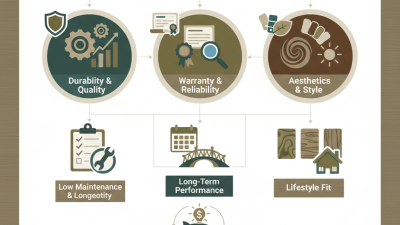
When comparing composite decking manufacturers, look beyond catalog photos and headline prices. Ask how production quality is checked from batch to batch. Useful evidence includes written inspection procedures, test reports, and clear records of recycled or virgin material content. Ask for proof. A sample board can reveal color variation, surface texture, and edge finish, but it cannot confirm long-term performance by itself.
Match technical data to the project’s climate and use. Compare moisture resistance, UV exposure results, slip performance, and the temperature range recommended for installation. Request guidance on joist spacing, fasteners, and ventilation, too. These details affect both appearance and service life. Requirements vary by market, so confirm that documentation suits the destination and intended application. A polished brochure is not a substitute for a report you can verify.
Capacity and communication matter once an order moves beyond samples. Check stated lead times, export packaging, container loading plans, and how damaged or inconsistent boards are handled. Ask for references from projects with similar weather and traffic. Warranty terms deserve close reading, especially exclusions and maintenance conditions. No scorecard captures everything; I still find small color differences easy to underestimate. Compare physical samples under daylight, then record questions and answers before placing a large order.
Composite decking manufacturers differ by region because climate, building habits, and supply chains shape their products. In North America, many producers focus on boards for residential decks, with textured surfaces and color options designed for outdoor living. Buyers should ask how a product performs through freeze-thaw cycles and strong summer sun. Samples help. A small board can reveal more than a polished catalog.
European manufacturers often work within established building-product standards and varied local climates. Their ranges may emphasize restrained colors, defined profiles, and compatibility with regional installation systems. Check whether technical documents cover slip resistance, water absorption, and fixing methods. Requirements can vary by market, so a general specification sheet may not answer every project question.
Across Asia-Pacific, manufacturers operate near major raw-material and export networks, though capabilities vary widely. Some can support large orders and custom dimensions; others may have longer lead times or fewer independent test reports. Request recent test results, production tolerances, and a clear warranty scope before comparing prices. Ask who handles quality checks. Regional labels are useful clues, not proof of consistent quality, and delivery costs can change the final comparison.
Global buyers should compare more than color cards. Composite decking manufacturers typically offer capped and uncapped boards, solid or hollow profiles, fascia, and matching railing. These options affect appearance, installation, and long-term maintenance. For quality checks, ask for independent test results against ASTM D7032, which covers performance ratings for wood-plastic composite and plastic lumber decking. ISO 9001 certification can indicate a documented quality-management system, but it does not prove that every board performs equally well. Inspect samples for consistent thickness, clean edges, and a surface that still feels safe when damp.
Sustainability claims need evidence. Grand View Research estimated the global wood-plastic composite market at about US$7.1 billion in 2023, with projected growth through 2030. Growth alone says little about environmental impact. Ask manufacturers to document recycled content, material sourcing, and product life-cycle data, such as an environmental product declaration. A recycled-content figure alone is hard to compare across suppliers. I would also ask how boards handle heat, fading, and replacement parts; these practical details can be less polished than marketing suggests.
Tips: Request a sample and leave it outdoors for several days. Check color change, surface temperature, and water drainage. Compare warranties alongside test reports, and verify that the specified board profile matches the project’s installation conditions. Small details matter.
Common flame-spread-index classification bands used with ASTM E84 and building-code references.
The chart shows each class’s upper flame-spread-index limit: Class A, 25; Class B, 75; and Class C, 200. These are classification thresholds, not manufacturer-specific product results. Check a product’s test report and applicable local code; ASTM E84 measures surface-burning characteristics, not fire resistance.
Global buyers should assess composite decking suppliers against the conditions the boards will face, not just catalog photos. Ask for product data covering board dimensions, weight, slip performance, water absorption, and expected color change. Check which test methods were used; results from different methods may not be directly comparable. Details matter.
Request physical samples and inspect the surface in daylight. Compare color across several boards, check edges for consistency, and note how the finish feels when damp. A small sample cannot predict years of outdoor exposure, though. Ask how the supplier evaluates weathering and whether test reports match the exact product being quoted.
Reliable sourcing also depends on production and delivery. Confirm monthly capacity, packaging dimensions, minimum order quantities, and realistic lead times in writing. Discuss how damaged boards or production variations are handled. If a supplier provides installation guidance, check that it explains spacing, substructure, and ventilation for your project conditions. Buyers sometimes focus heavily on unit price; freight, storage, and replacement stock can change the real cost. I would compare these costs carefully, while remembering that forecasts are rarely perfect. Request recent references from comparable projects, then verify details directly where possible.
| Evaluation dimension | What global buyers should check | Evidence to request | Sourcing decision signal |
|---|---|---|---|
| Product standards | Confirm that the decking profile and intended use are covered by the requirements in the destination market. Relevant references may include ASTM D7032 for performance-rated walking surfaces and EN 15534-4 for decking profiles and tiles. | Current test reports identifying the exact product, tested configuration, test methods, and issuing laboratory. | Prefer reports that can be matched directly to the quoted profile and applicable local requirements. |
| Material and construction | Clarify whether the product is solid or hollow, capped or uncapped, and what polymer and wood-based components it contains. Check whether the specification changes between product colors or production batches. | Technical data sheet, cross-section drawing, declared composition, and written confirmation of any product-specific variations. | A clear, consistent specification makes product comparisons and replacement orders more reliable. |
| Structural performance | Check the stated design loads, span limits, support spacing, and installation conditions. Do not infer load capacity from board appearance or dimensions alone. | Applicable test results, installation manual, span tables, and any required engineering information for the project. | The published guidance should cover the proposed deck layout and intended use. |
| Slip and surface characteristics | Assess the surface finish and the slip-resistance test method relevant to the project. Results can depend on the test method and surface condition, so avoid comparing unlike test results. | Test report stating the method, test conditions, surface type, and measured result; samples of the actual finish. | Select against the project specification and local requirements, rather than a generic claim such as “non-slip.” |
| Weathering and durability | Review resistance claims for moisture, temperature changes, UV exposure, fading, staining, and wear. Performance depends on formulation, product construction, exposure, and maintenance. | Relevant test reports, care instructions, color samples, and warranty terms describing covered conditions and exclusions. | Compare evidence and warranty scope; do not treat a warranty period as a guaranteed service life. |
| Fire and regulatory requirements | Determine whether the building type, installation location, or local code requires a specific fire classification or other regulatory documentation. | Applicable classification or test documentation for the exact product and assembly, plus destination-market compliance documents where required. | Verify suitability with the project designer or authority having jurisdiction before ordering. |
| Quality management and traceability | Check how incoming materials, production batches, finished goods, and nonconforming products are controlled. A management-system certificate does not by itself prove product performance. | Relevant current management-system certificates, inspection records, batch identification examples, and documented quality procedures. | Prefer suppliers able to trace a delivered batch and explain their inspection and corrective-action process. |
| Production capacity and lead time | Confirm available capacity, production scheduling, peak-season constraints, and the lead time for the specified profile, color, and quantity. | Written production schedule, current capacity confirmation, order milestones, and a process for communicating delays. | Use a lead time confirmed for the actual order rather than a general catalog estimate. |
| Export packaging and logistics | Review board lengths, bundle configuration, protective packaging, container loading plan, shipment terms, and responsibility for export and import documentation. | Packing list template, packaging photographs, loading plan, agreed Incoterms® rule and named place, and document checklist. | Confirm responsibilities and document requirements in the purchase contract before production or shipment. |
| Commercial terms and after-sales support | Compare quotation validity, payment terms, minimum order quantity, spare-board availability, claims handling, and warranty conditions. These terms are supplier- and order-specific. | Itemized quotation, draft sales contract, written warranty, claims procedure, and confirmation of replacement-part availability. | Evaluate total landed cost and practical remedies, not unit price alone. |
| Sample and pre-shipment verification | Check that approved samples represent the production finish, color, profile, and packaging. Define inspection criteria before the order is released. | Signed sample record, approved specifications, inspection checklist, and pre-shipment inspection results when agreed. | Keep a retained reference sample and link acceptance criteria to the purchase order. |
Buyer note: Standards, test methods, building codes, and import requirements vary by destination and application. Confirm current requirements with the relevant standards body, project professional, or local authority before placing an order.