What Is the Best Acoustic Panel for Your Space?
Choosing the best Acoustic Panel is less about appearance and more about how a room behaves.
A boardroom may need speech clarity, while a podcast studio demands controlled reverberation. A busy restaurant has different problems entirely. Hard ceilings, glass walls, exposed concrete, and bare floors can reflect sound like mirrors. The result may be echo, distraction, or speech that feels strangely distant. I have seen attractive panels installed behind furniture, where they offered little useful absorption. Design alone cannot solve poor placement.
The World Health Organization’s Environmental Noise Guidelines for the European Region reported that environmental noise contributes to major health burdens, including sleep disturbance and annoyance. Its 2018 assessment estimated more than one million healthy life-years were lost annually in Western Europe because of environmental noise. That figure concerns environmental exposure, not every indoor room, but it shows why acoustic comfort deserves serious attention. The U.S. General Services Administration’s Sound Matters guidance also connects workplace acoustics with concentration, privacy, and user satisfaction.
This guide compares panel materials, absorption ratings, thicknesses, mounting methods, and placement strategies. ISO 354 laboratory testing and ASTM C423 ratings can provide useful evidence, yet test results do not perfectly predict a real room. Furniture, occupancy, ventilation noise, and ceiling height change performance. Small details matter. A panel may absorb mid-frequency speech while leaving low-frequency noise almost untouched. That is easy to miss.
The best solution is rarely the most expensive one. It is the panel selected for the room’s actual use, measured conditions, and acoustic weaknesses. Mistakes happen. Careful evaluation makes them less costly.
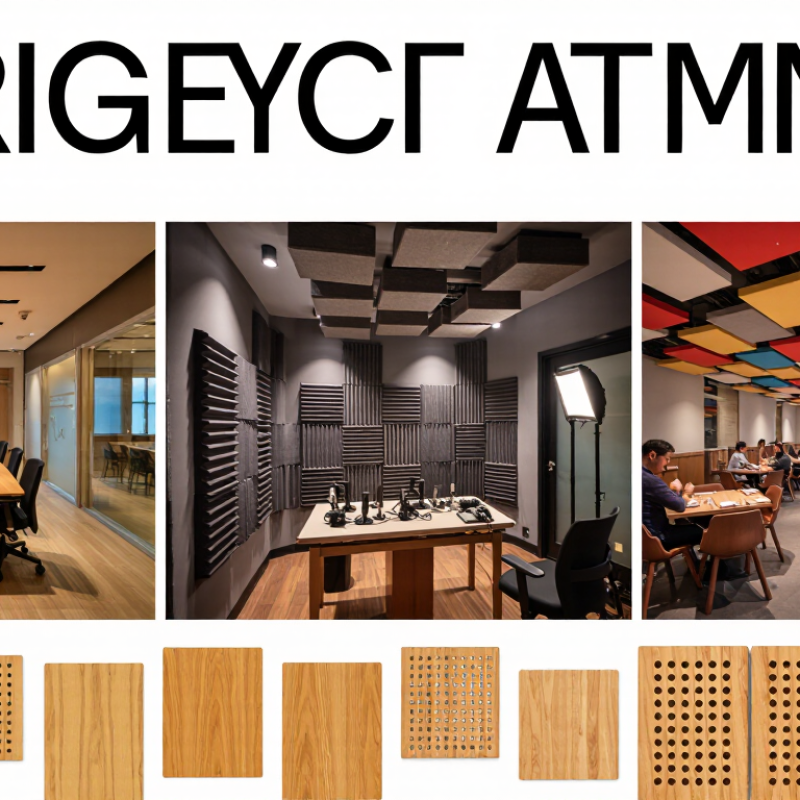
What Is an Acoustic Panel and How Does It Improve a Space?
An acoustic panel is a porous surface treatment that absorbs sound energy rather than blocking it. Its fibers or open-cell structure reduce reflections, echoes, and harsh high frequencies. In a room with bare walls, speech can bounce between surfaces and become tiring to follow. A correctly placed panel softens those repeated reflections.
The improvement is easy to notice in practical spaces. A meeting room may sound clearer when panels sit beside the speaker and behind listeners. In a home office, a panel near a hard desk wall can reduce sharp, metallic reflections. Fabric thickness, panel density, air gaps, and placement all affect performance. Technical data, such as a Noise Reduction Coefficient, can help, but it should not be the only deciding factor. A single rating cannot describe every room.
Measure the room before buying anything. Clap tests are useful, but professional measurements are more reliable. During one layout adjustment, I found that covering one wall made the room feel unnaturally dull. A smaller arrangement worked better. That result was not obvious from product specifications alone. Acoustic panels also have limits: they will not fully stop traffic noise, bass vibration, or sound passing through a thin wall. For those problems, construction changes may be necessary. Leave some surfaces reflective, especially when the space needs energy and natural conversation. The best panel is not always the thickest one.
Which Acoustic Panel Materials and Designs Suit Different Needs?
Choosing an acoustic panel starts with the room’s problem, not its appearance. Hard walls create flutter echoes, while low ceilings often amplify speech noise. ASTM C423 laboratory tests report absorption through the Noise Reduction Coefficient, or NRC. Higher values usually indicate better mid-frequency absorption, but installation changes performance.
Fiberglass and mineral-fiber panels often reach NRC values around 0.80 to 1.00. They suit offices, classrooms, studios, and meeting rooms needing clear speech. A 50-millimeter panel with an air gap can improve lower-frequency absorption. Thin foam may look convenient, yet it usually performs less effectively on bass-heavy noise. It can also age poorly in busy spaces.
PET felt panels commonly provide NRC values near 0.70 to 0.95, depending on density and thickness. They work well for curved walls, ceiling clouds, and decorative partitions. Slatted wood designs need an absorbent backing; without it, the slats mostly scatter sound. The 2023 ASHRAE Handbook—HVAC Applications stresses that room shape, reverberation, and background noise must be assessed together. ISO 354 testing also shows why laboratory ratings cannot predict every installed result.
Measure before buying.
That step is often skipped.
Place panels at reflection points near speech zones, then test the room again. I would avoid covering every surface, because an overly dead room can feel unnatural. Even published data has limits. Furniture, doors, occupancy, and mounting gaps can change the result more than expected.
How Should You Assess Your Space’s Acoustic Treatment Requirements?
What Is the Best Acoustic Panel for Your Space?
How Should You Assess Your Space’s Acoustic Treatment Requirements?
Choosing an acoustic panel should begin with the room, not the product. A home office, classroom, studio, and restaurant create very different sound problems. I assess room size, ceiling height, surfaces, occupancy, and the activities taking place there. Stand in the room. Listen carefully. Note fluttering echoes, harsh reflections, and unclear speech. These observations often reveal problems that photographs cannot show.
For a more reliable assessment, measure reverberation time across several frequency ranges. A measurement microphone can identify excessive low-frequency buildup or weak speech clarity. An empty room may sound bright, while furniture and people later reduce reflections. This is where planning can become imperfect. Real rooms change throughout the day. Review both measured results and everyday listening conditions.
Speech-focused spaces usually need controlled mid and high frequencies. Music rooms may also require balanced low-frequency treatment. Use absorption where reflections are strongest, especially on nearby walls and ceilings. Avoid covering every surface, because excessive absorption can make a room feel dull and unnatural.
I once treated a small meeting room too aggressively. Conversations became quieter, but the space felt strangely lifeless.
A better approach is to install treatment gradually, then reassess speech clarity, reverberation, and comfort. Placement matters as much as panel thickness, and performance depends on installation details, spacing, and the surrounding materials.
How Do You Choose the Right Panel Size, Thickness, and Placement?
Choosing the best acoustic panel starts with the room’s problem, not its decoration.
Measure reverberation when possible. ISO 3382-2 provides methods for measuring reverberation time in ordinary rooms. In classrooms, ANSI/ASA S12.60 recommends a reverberation time of 0.6 seconds or less for core learning spaces. That target gives designers a useful reference.
Panel thickness changes performance. A 25-millimeter panel can control speech reflections, but a 50-millimeter panel usually absorbs more lower-frequency energy. Check the ASTM C423 rating before buying. This test reports absorption coefficients and calculates the Noise Reduction Coefficient from 250, 500, 1000, and 2000 Hz. An NRC of 0.80 suggests strong average absorption under laboratory conditions, not identical performance in every room.
Placement matters as much as size. Cover the first-reflection points on side walls, ceiling, and the wall behind a presenter or monitor. Leave an air gap behind the panel. A gap of 50 to 100 millimeters can improve low-frequency absorption, according to common laboratory testing practices. For a small office, several spaced panels often work better than one oversized panel. Do not cover every surface. Excessive absorption can make speech feel strangely dry and unnatural. I have seen tidy panel grids fail because they ignored the desk, windows, and hard floor. The room looked treated, yet voices still bounced between uncovered surfaces. Recheck the space after installation; real furniture rarely behaves like a test chamber.
How Can You Compare Acoustic Panels by Performance, Cost, and Style?
What Is the Best Acoustic Panel for Your Space?
The best acoustic panel depends on performance, cost, and visual purpose. Start with the room’s problem, not the panel’s appearance. ISO 3382-2 measures reverberation time, which reveals how long sound lingers. A meeting room with sharp echoes needs absorption, not simply more decoration. ASTM C423 tests sound absorption under laboratory conditions. Review the mounting method and frequency range carefully. An NRC near 0.80 usually indicates strong broadband absorption. It does not mean the panel blocks outside noise. That distinction is often missed.
Compare cost per square metre, installed labor, edge treatment, and replacement difficulty. A cheaper panel may require more coverage or additional ceiling treatment. A thicker product can improve lower-frequency control, but it may consume valuable wall space. WHO’s 2018 Environmental Noise Guidelines recommend indoor bedroom noise below 30 dB(A) at night. Wall panels alone rarely achieve that target. They reduce reflections; construction upgrades reduce transmission. I have seen attractive layouts fail because the wrong issue was measured. That mistake is expensive.
Tips: Request test data at 250, 500, 1,000, and 2,000 Hz. Sketch coverage before ordering. Leave clear space around lights and ventilation. Choose fabric or finish that supports the room’s use, cleaning needs, and visual balance. A calm room is not always a quiet room. Recheck the design after installation, because furniture and occupancy can change the result.
What Is the Best Acoustic Panel for Your Space?
Compare common acoustic panel types by sound absorption, typical installed cost, and visual character.
| Panel Type |
Typical Installed Cost |
Style Characteristics |
Best Use |
| Fabric-wrapped fiberglass |
$8–$20 / sq. ft. |
Broad color and fabric choices |
Offices, studios, meeting rooms |
| PET felt |
$6–$18 / sq. ft. |
Lightweight, colored, and often patterned |
Open offices, classrooms, restaurants |
| Wood slat with acoustic backing |
$15–$35 / sq. ft. |
Warm architectural appearance |
Restaurants, lounges, premium interiors |
| Perforated wood panel |
$18–$40 / sq. ft. |
Natural finish with a refined look |
Auditoriums, boardrooms, public spaces |
| Acoustic foam |
$3–$12 / sq. ft. |
Technical studio aesthetic |
Recording rooms, podcasts, home studios |
The chart uses representative mid-range Noise Reduction Coefficient (NRC) values. NRC is a laboratory-tested sound-absorption rating from 0 to 1, with higher values indicating greater absorption. Actual results depend on thickness, mounting distance, room surfaces, installation coverage, and test standards. Costs are typical installed-market ranges in USD and exclude unusual structural work.