Choosing the right Wood Slat Wall Panel is more complex than comparing colors and prices. Global buyers must examine material quality, acoustic performance, installation methods, and supplier reliability. A panel that looks elegant in a showroom may warp in humid climates or create unexpected installation costs. That detail matters.
This guide introduces ten strong options for residential, commercial, hospitality, and office interiors. Each selection considers veneer or solid-wood construction, slat spacing, backing materials, sound absorption, surface durability, and maintenance needs. We also look at practical issues, including packaging, shipping protection, sample approval, and communication with international manufacturers. Certifications can support confidence, but buyers should still verify current test reports and product specifications directly.
Some projects need warm oak tones. Others require darker walnut finishes or moisture-resistant alternatives. No panel wins everywhere. Regional building practices, indoor humidity, fire-safety requirements, and available installers can change the final decision. Buyers should measure twice and request samples before placing large orders. Even experienced specifiers can overlook small differences between product photos and delivered materials. That is worth remembering.
The selections below are not based on appearance alone. They reflect documented features, realistic applications, and purchasing concerns that affect long-term value. However, product ranges and certifications may change over time. Treat this guide as a dependable starting point, not a substitute for technical verification.
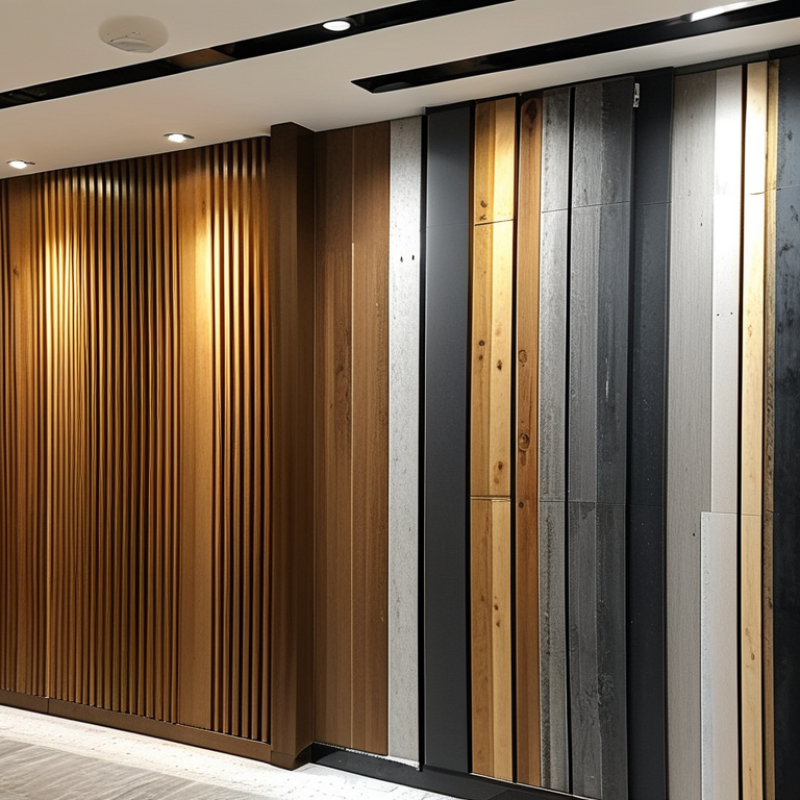
Wood slat wall panels combine narrow wooden strips with a backing board, often made from felt, plywood, or engineered wood. The slats create repeated lines across the surface. This pattern adds warmth, depth, and a stronger architectural character than flat wall paint.
In interior projects, I have seen them used behind reception desks, television walls, dining areas, bedrooms, and meeting rooms. Their spacing can soften sound, especially when the backing includes acoustic felt. However, they do not replace proper acoustic treatment in a busy hall or open office. That distinction matters. Many buyers expect silence, but these panels mainly reduce echo and reflected noise.
Installation usually involves measuring the wall, locating studs, and securing each panel evenly. Uneven spacing becomes obvious under strong side lighting. Wood movement also deserves attention. Humid rooms can cause natural timber to expand slightly, so bathrooms and poorly ventilated kitchens need careful material selection. I once underestimated this issue on a small renovation, and the joints looked tighter after several wet weeks.
For global buyers, check fire-rating documents, formaldehyde emissions, moisture resistance, and packaging strength before ordering. Local building requirements may differ. Panels suit hotels, restaurants, offices, retail interiors, and residential spaces, but they are not ideal for every wall. A sample helps reveal color variation, surface texture, and installation quality before a large purchase.
When evaluating wood slat wall panels, start with the material beneath the finish. Solid timber, veneer, and engineered wood behave differently in changing climates. Ask for the wood species, core composition, moisture content, and surface coating. A warm oak tone may look consistent online, yet samples can reveal uneven grain or visible joints. Order a physical sample.
Check panel dimensions carefully. Slat width, gap spacing, felt thickness, and backing density affect both appearance and sound control. Not every decorative panel improves acoustics. Request tested acoustic data, such as absorption results, rather than relying on marketing language. In my project inspections, loose edges often came from inaccurate cutting, not poor design. That detail is easy to miss.
Global buyers should examine installation requirements before comparing prices. Confirm wall compatibility, fixing methods, replacement access, packaging strength, and tolerance ranges. Panels shipped across humid regions need reliable moisture protection. Ask for batch consistency and clear care instructions. Fire performance must be supported by test reports accepted in the destination market. Sustainability claims also deserve evidence, including responsible sourcing documents and formal chain-of-custody information. Delivery planning matters too; damaged corners can turn a low unit price into an expensive delay. I once underestimated spare-panel needs, and matching a later batch proved difficult. That mistake still influences my purchasing checklist. A lower price is not always lower risk.
Wood slat wall panels offer warmth, texture, and practical acoustic improvement for international interiors. Global buyers should compare core materials, surface finishes, slat spacing, and backing systems carefully. Panels with moisture-resistant cores suit humid rooms better. Real wood veneer gives natural variation, while printed finishes provide more consistent color. Ask suppliers for samples before placing large orders. Lighting can change the appearance dramatically.
Installation quality matters as much as panel quality. Measure twice. Small gaps matter. Uneven walls may require battens or adjustable fixing rails. Check panel dimensions against local doorways, elevators, and delivery limits. For commercial projects, request technical data for fire performance, formaldehyde emissions, and acoustic ratings. These requirements differ between countries, so general claims are not enough. Independent test documents provide stronger purchasing confidence.
Tips: Keep panels away from direct water unless they are specifically rated for wet areas. Leave expansion space around edges. Use concealed screws where possible, but confirm the fixing method with the supplier. Dark finishes can make small rooms feel narrower. I once underestimated this effect in a compact office, and the room felt heavier than expected. A lighter tone might have worked better. Also, confirm packaging protection, replacement-piece availability, and installation guidance before payment. A low unit price can lose its advantage after damaged panels, delays, or difficult fitting.
Wood slat wall panels differ sharply in material, acoustic behavior, and installation effort. Real wood veneer offers natural grain and a warmer visual character. It can, however, move slightly with humidity. MDF provides consistent dimensions and usually costs less. Its edges need careful sealing in damp rooms. PET felt-backed panels are lightweight and often contain recycled fibers. They resist dents reasonably well, but their color can vary between production batches.
Acoustic performance depends on the complete wall assembly, not the slats alone. Narrow gaps between slats allow sound to reach the felt layer. A deeper cavity with mineral wool usually improves absorption, especially for speech and mid-frequency noise. On bare walls, the same panel may perform modestly. Ask for tested NRC or equivalent data, and check the test setup. Ratings can mislead when the installation differs from the laboratory sample. Short reverberation times matter in offices and restaurants.
Installation seems simple until walls are uneven. A laser level, spacers, and hidden fixings produce cleaner lines. Experienced installers also leave expansion gaps near floors and ceilings. Panels should acclimatize indoors before cutting. I once saw a rushed installation where uneven joints became obvious under side lighting. That mistake was avoidable. For global projects, verify fire classification, formaldehyde limits, moisture resistance, and local mounting requirements. Imported specifications may not match regional building rules. Keep spare panels from the same batch; repairs rarely blend perfectly.
The comparison below covers commonly available wood-slat panel constructions for residential, commercial, hospitality, and public interiors. Acoustic ratings are indicative ranges for complete wall assemblies and should be confirmed through project-specific laboratory testing.
| No. | Panel Type and Main Material | Typical Panel Size | Slat Construction | Acoustic Backing or Assembly | Typical NRC Range* | Moisture Suitability | Recommended Installation | Maintenance | Best Use |
|---|---|---|---|---|---|---|---|---|---|
| 1 | Wood Veneer Slats on PET Felt | 2400–3000 mm long × 600 mm wide; 20–30 mm thick | MDF or plywood core with natural wood veneer; slat gaps commonly 13–17 mm | 9–12 mm recycled PET acoustic felt, usually installed over a small air cavity | 0.45–0.85 | Suitable for dry interior areas; protect from prolonged humidity and direct water | Screw through the felt into battens or wall plugs; adhesive may be used only on sound, level substrates | Dust with a soft brush or vacuum; wipe veneer with a lightly damp cloth | Living rooms, offices, meeting rooms, restaurants, and feature walls requiring balanced appearance and absorption |
| 2 | Melamine-Faced MDF Slat Panel | 2400–2800 mm long × 600 mm wide; 18–25 mm thick | Decorative melamine surface over moisture-resistant MDF; consistent factory finish | Usually supplied with PET felt; performance improves with a rear cavity | 0.35–0.75 | Appropriate for controlled indoor environments; edges should be sealed in humid locations | Mechanical fixing to timber or metal battens; concealed screws are commonly used | Low maintenance; clean with a non-abrasive cloth and mild neutral cleaner | High-traffic offices, retail interiors, corridors, and projects needing consistent color and lower cost |
| 3 | Natural Veneer Plywood Slat Panel | 2400–3000 mm long × 600 mm wide; 20–30 mm thick | Layered plywood slats with oak, walnut, ash, or similar veneer | PET felt or mineral-fiber backing; optional air gap behind the panel | 0.40–0.80 | More dimensionally stable than many solid-wood options, but still intended for interior use | Fix to battens with screws; allow expansion gaps at walls, corners, and panel joints | Periodic dusting; repair small veneer damage with a compatible finishing product | Premium offices, libraries, boardrooms, hotels, and interiors requiring a natural grain pattern |
| 4 | Solid Hardwood Slat Panel | Custom lengths; commonly 1800–3000 mm long with 20–40 mm deep slats | Solid oak, ash, maple, walnut, or other kiln-dried hardwood | Acoustic felt, perforated backing, or a separate absorbent layer behind the slats | 0.30–0.70 | Best in stable, conditioned interiors; wood movement must be considered | Mechanical fixing to a level batten frame; acclimatize wood before installation | Dust regularly; refinish or reseal when required by traffic and exposure | Luxury residential interiors, hospitality spaces, galleries, and high-end feature walls |
| 5 | Bamboo Slat Panel | 2400–2900 mm long × 600 mm wide; 18–25 mm thick | Strand-woven or laminated bamboo slats with a factory coating | PET felt or recycled-fiber backing; absorption depends strongly on the open area and cavity | 0.35–0.75 | Suitable for dry interiors; use a moisture-resistant specification for humid climates | Screw fixing to battens is preferred; maintain ventilation and expansion allowance | Clean with a soft cloth; avoid standing water and harsh solvents | Projects seeking a renewable-looking material, warm color, and relatively hard-wearing surface |
| 6 | Solid Softwood Slat Panel | 2400–3000 mm long × 500–600 mm wide; 18–30 mm thick | Spruce, pine, cedar, or similar lightweight solid-wood slats | Acoustic fleece, PET felt, or mineral wool behind open slats | 0.35–0.75 | Interior use; some species tolerate humidity better, but finishing and ventilation remain important | Install on battens with corrosion-resistant screws; pre-drilling reduces splitting | Regular dusting; inspect knots, joints, and surface coating periodically | Scandinavian-style interiors, ceilings, cabins, studios, and cost-sensitive projects |
| 7 | Wood Slats with Mineral Wool Backing | 1200–2400 mm long × 600 mm wide; typically 40–80 mm total system depth | Veneered MDF, plywood, or solid-wood slats with a relatively open face | Mineral wool or glass-mineral fiber absorber, normally covered by an acoustic fabric | 0.60–0.95 | For dry, protected interiors; select moisture-resistant backing for demanding environments | Install as a framed system or suspended wall/ceiling assembly; follow fire and fixing requirements | Vacuum the slats and fabric carefully; replace damaged fabric modules when necessary | Recording rooms, auditoriums, conference spaces, classrooms, and areas with high reverberation |
| 8 | Perforated Wood Acoustic Panel with Decorative Slats | 2400–3000 mm long × 600 mm wide; 16–25 mm thick | Perforated MDF or plywood face with wood veneer and a regular perforation pattern | Acoustic fleece or mineral-fiber absorber behind the perforated face | 0.55–0.90 | Generally intended for conditioned indoor spaces; protect perforations from water and dust buildup | Fix to battens or a metal subframe; align perforation patterns carefully between panels | Use low-suction vacuum cleaning; avoid soaking the perforated surface | Music rooms, lecture halls, cinemas, offices, and projects needing higher absorption with a timber appearance |
| 9 | Open Wood Slat Baffle System | Custom modules; baffles commonly 1200–3000 mm long and 100–300 mm deep | Vertical or horizontal wood slats suspended with visible spacing between elements | Optional acoustic fleece or mineral wool above and between baffles | 0.45–0.90 | For interior ceiling or suspended applications; coordinate with HVAC and sprinkler systems | Hang from threaded rods, cables, or a proprietary ceiling grid; use a level support structure | Accessible surfaces can be dusted or vacuumed; inspect suspension hardware periodically | Open-plan offices, restaurants, airports, retail spaces, and ceilings requiring acoustic zoning |
| 10 | Exterior-Rated Thermally Modified Wood Slat Panel | Custom lengths; commonly 1800–3000 mm long with 20–40 mm deep slats | Thermally modified timber or durable exterior wood with an exterior-grade coating | Usually no absorbent backing; acoustic benefit mainly comes from spacing and the wall assembly | 0.15–0.45 | Suitable for covered exterior areas when correctly detailed; not a substitute for waterproof cladding | Use a ventilated rainscreen or exterior subframe with stainless or corrosion-resistant fixings | Inspect coating, joints, drainage, and fasteners; recoat according to exposure and finish type | Covered terraces, sheltered façades, outdoor hospitality areas, and ventilated decorative cladding |
* NRC means Noise Reduction Coefficient. The stated ranges are indicative rather than product certifications; actual results vary with slat width, open area, backing density, wall cavity depth, mounting method, edge treatment, and the tested frequency range. Always verify fire classification, formaldehyde emissions, moisture resistance, and local building-code compliance for the complete installed assembly.
10 Best Wood Slat Wall Panels for Global Buyers?
Choosing a supplier matters more than selecting a striking slat profile. International buyers should request physical samples, technical drawings, and recent production photos. Check the core material, veneer thickness, acoustic backing, fire rating, and moisture content. A supplier should explain tolerances clearly, not hide behind attractive images. During overseas fit-outs, small color differences became visible under warm lighting. That lesson still influences every purchase decision.
Tips: Ask for a sample from current production. Confirm panel dimensions, packing methods, and replacement procedures in writing. Review export experience, lead times, payment terms, and shipping documents before placing a deposit. A dependable supplier can discuss customs requirements and provide consistent answers across sales and production teams. Request independent test reports when projects require acoustic or fire-performance claims. Do not rely only on certificates sent as scanned files.
A factory audit, video inspection, or trusted local representative can reveal useful details. Look for organized storage, labeled materials, moisture-control practices, and careful edge protection. References from similar international projects add practical evidence. However, references are not proof of perfect performance. A sample can still mislead if production changes later. Build approval checkpoints into the order, including pre-shipment photos and random inspections. My own supplier reviews have sometimes focused too heavily on price. That was a mistake. Low unit costs may disappear through damaged cartons, inconsistent finishes, or delayed installation schedules.